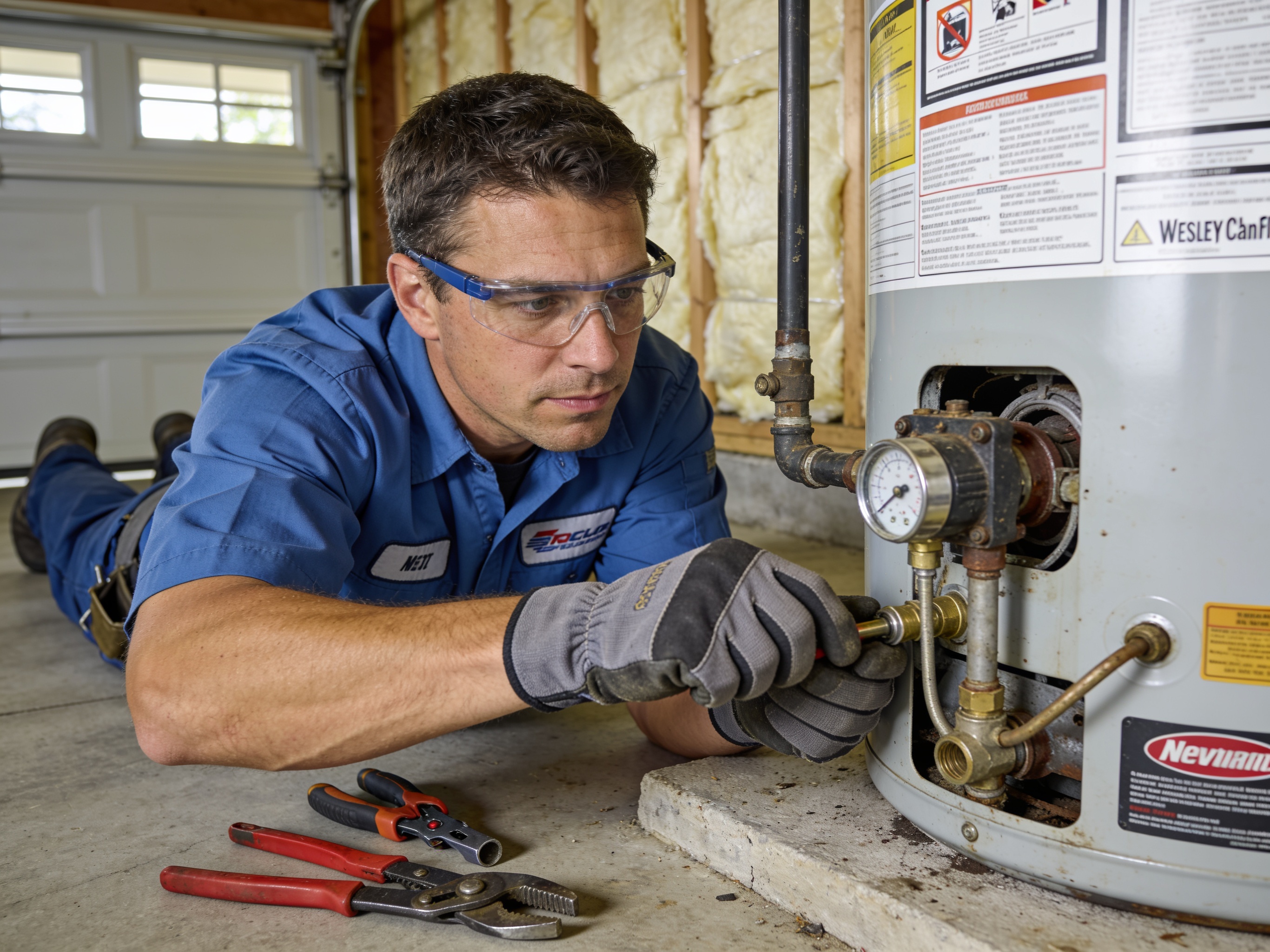
Wesley Chapel's humid subtropical climate speeds up corrosion on water heater tanks, especially in neighborhoods like Wiregrass and Seven Oaks where many homes built in the last twenty years still rely on standard electric units. Homeowners near The Shoppes at Wiregrass often see premature failure from constant humidity and mineral-heavy water drawn from local aquifers. Replacement work here requires checking venting clearances and seismic strapping even though Pasco rarely sees major quakes, because code inspectors flag improper installs during resale.
Meadow Pointe properties frequently have garages or utility closets that limit access, so crews must plan for tight turns when hauling out old 50-gallon tanks and bringing in new high-efficiency models. Nearby Land O' Lakes and Zephyrhills share the same water chemistry, meaning scale buildup inside dip tubes and anode rods is routine. Technicians routinely flush lines before final hookup to avoid sending sediment into new heating elements.
Tankless conversions are popular along Wiregrass Ranch Boulevard because they free up floor space, yet they demand larger gas lines or upgraded electrical service that older Meadow Pointe panels may not support. Proper sizing accounts for simultaneous showers during peak summer humidity when demand spikes. Every replacement includes a final pressure test and leak check at the shutoff valve to match Pasco County requirements.
Technician insight
In Wesley Chapel, the thing that catches most people out with Water Heater Replacement is how quickly sediment from our local water builds up in homes around Seven Oaks and Meadow Pointe; skipping the flush on the new install means the fresh tank starts scaling within months.
Wiregrass Townhome Swap
Homeowner in Wiregrass reported lukewarm water during morning use. Inspection showed heavy scale inside a 12-year-old electric tank. Crew removed the unit, flushed lines, and installed a new 50-gallon model sized for the two-bath layout. Outcome was steady hot water and no further sediment complaints.
How it works
- 1
Site Assessment
Technician inspects current unit location, venting, and water lines in the home's utility space.
- 2
Unit Selection
Match capacity and fuel type to household demand while noting local water hardness.
- 3
Old Unit Removal
Drain tank, disconnect connections, and safely extract the heater through available access points.
- 4
New Installation
Set new heater, connect lines, install expansion tank if needed, and verify all seals.
- 5
Testing and Handover
Fill, heat, check for leaks, and confirm proper operation before leaving the site.
Pricing
Upfront quotes after inspection account for unit type, access, and any line upgrades required in Pasco County homes.